Times of Pain
A Short Story by Abdul Latif Moubarak … Egypt
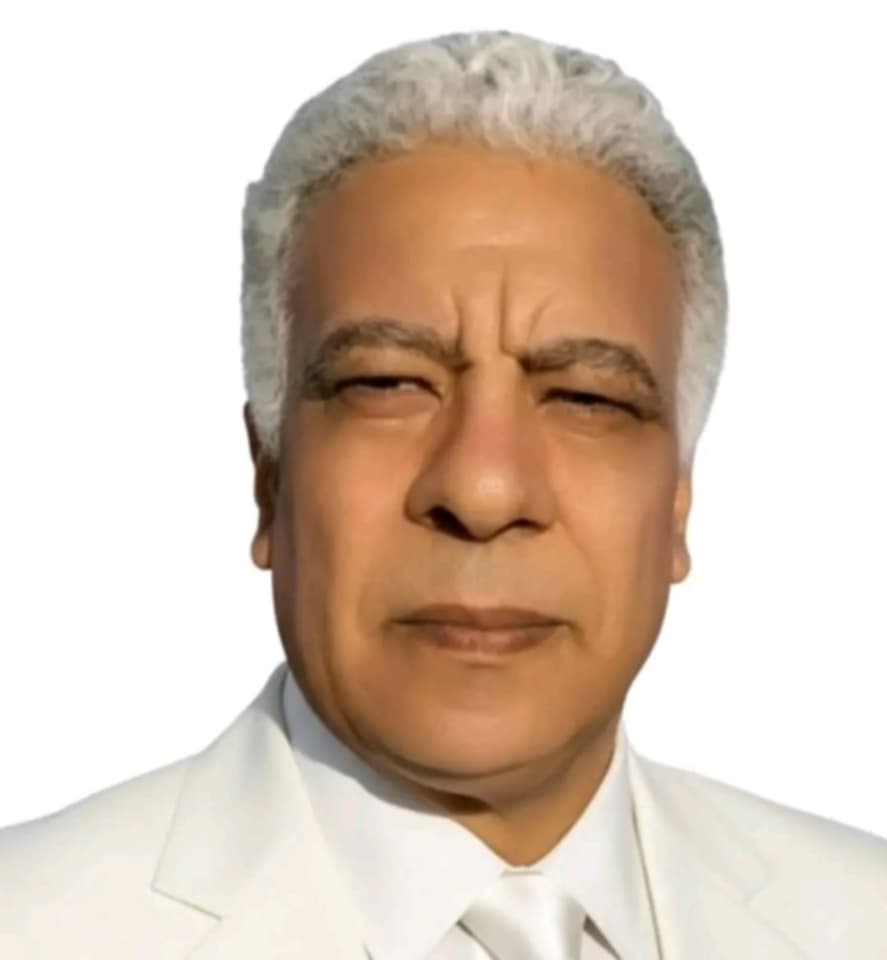
For Mohyi, Suez was not merely the city he lived in; it was an open wound on the sea, a place that breathed salt, zinc, and the rust of passing ships. He was fifty years old and he was a poet. He wore a gray coat with edges singed by cheap cigarettes and walked at a slow pace along the Port Tewfik corniche. It was five in the morning, the time of the dawn prayer call—the moment he had christened in his worn-out notebook as “The First Time: The Pain of Beginnings.”
At that precise moment, the fog parted over the Canal, revealing the lights of gigantic container ships advancing through the dark water like mythological creatures. Mohyi sat on a worn wooden bench facing the waterway, pulled out his ballpoint pen, and opened his red velvet notebook. He did not write about love or nature; his poems resembled Suez: angry, silent, and steeped in the smell of diesel and sea salt.
He recalled how it had all begun thirty years earlier, when he held his father’s funeral. The man had left him an old house in the “El-Ghareeb” neighborhood and a collection of classical poetry anthologies. His father used to tell him repeatedly: “Poetry, my son, is not made of rhyming words. Poetry is what remains of you when the city goes dark.” And the city went dark every night, allowing Mohyi to light the candle of his new verse.
With the first rays of the sun, Mohyi moved to a narrow alley filled with the aroma of traditional bread and grilled fish. The “El-Ghareeb” district is the beating heart of Suez’s history and pain. There, among walls that still bore the shrapnel marks of the October 1973 war, stood his old house with its wooden ceiling and a balcony overlooking intertwined alleys.
He entered the “Al-Sharea Al-Gded” café, an ancient haunt frequented by retirees and exhausted fishermen. He sat in his usual corner, where the owner, Uncle Saber, kept a vintage photograph of Suez hanging on the wall.
”Good morning, our poet,” said Uncle Saber, placing a glass of strong tea in front of him.
Mohyi nodded with a faint smile: “Good morning, Uncle Saber. How is the sea today?”
The old man replied, wiping the table with a worn rag: “The sea never changes, Mohyi. It swallows our pains and gives them back to us with the waves. Have you written anything new?”
Mohyi opened his notebook and wrote under the title “The Second Time: Nostalgia for the Asphalt”:
Here, on these walls / dwell the names of those who left without a forwarding address. / Every shrapnel hole in this wall / is an eye gazing at those who are no longer here.
Mohyi did not write in isolation from people; he extracted his own pain from the stories of others. At noon, when the sun beat straight down on the Gulf of Suez and the heat became unbearable, he walked toward the port of El-Zaytiet. There, among the oil silos and large industrial complexes, he met the workers coming off their shifts, their faces blackened by factory smoke.
He watched his younger brother, Hossam, emerge from the factory gates. Hossam represented the other face of the past: he had chosen technical work and financial stability, abandoning the dreams of poetry and literature they had shared in their youth.
The two brothers met in a small cafeteria overlooking the port.
“How long will you keep measuring the city streets with your steps, Mohyi?” Hossam asked with regret, stirring sugar into his glass. “You are over fifty, you have no wife and no steady job—only these papers that don’t put food on the table.”
Mohyi looked at his brother’s rough hands, then at the distant sea, and said softly: “You build with iron and oil, Hossam, and I repair what crumbles in our souls. We both work in maintenance, but our tools are different.”
Hossam shook his head with a sigh: “But this pain is killing you, my brother. I see you fading more every day.”
At three in the afternoon, Mohyi made sure to attend “The Third Time: Shadows of the Past.” He headed toward the “El-Malaha” area, where memories of an unfulfilled ancient love accumulated. That was where Selma used to live—the woman he had loved in his youth, who had married a naval engineer and moved to Alexandria more than twenty years ago.
Mohyi stood in front of the Italian colonial-style building. The balcony Selma used to look out from was now abandoned; weeds grew along its ledge and it was covered in the dust of years.
He pulled a cigarette from his pack, lit it, and leaned against an old ficus tree. In those moments, he lost all sense of time. Their image together played out like a black-and-white film: her laughter on the beach of El-Khor, late returns from university, and the handwritten letters he secretly passed to her tucked inside anthologies of Arab poets.
He wrote in his notebook:
You did not leave, Selma / you remained here, petrified in the shadows of this balcony. / I come every afternoon to make sure that time did not die of forgetfulness / but died in waiting.
At sunset came the moment of the great transformation in Mohyi’s day: “The Fourth Time: The Prayer of Salt.” He returned to his old neighborhood and met his lifelong friends in the evening cool, near the Martyr Ahmed Hamdi Tunnel or beside the Garden of the Immortals.
His friends were a mosaic of forgotten writers, old activists, and fishermen who had lost their boats in successive crises. They sat on stone benches, kicking off poetry duals and historical debates.
Ibrahim, a local novelist who had published a single book at his own expense, said: “Suez is not what it used to be, Mohyi. Its peaceful and rebellious soul has been replaced by noise and factories.”
Mohyi replied: “The soul does not die, Ibrahim; it hides. Suez is like a mighty rock: waves crash against it and its features change, but Mount Attaka standing behind us always reminds us that the essence remains. The pain lies not in the changing of the city, but in our inability to keep pace with it.”
He then recited his latest verses; everyone fell silent, while the distant cry of seagulls served as a backdrop to his poem about the resilience of the land and lovers.
When night fell and the city dressed in deep blue, Mohyi headed to his favorite spot: the old railway line of Suez. That was where “The Fifth Time: The Solitude of Trains” resided.
He loved walking along the tracks that wound outward from the city. Those tracks reminded him of the displacement—those hard days when the people of Suez were forced to abandon their homes after the 1967 war. Mohyi was just a child then, and he remembered his mother’s tears as she gathered the kitchenware, with rain beating against the windows of the train bound for Zagazig.
He sat on the edge of the rail and picked up a handful of dirt mixed with engine oil.
“How many times did we leave, and how many times did we return?” he whispered to himself.
The true pain of poetry in Suez stemmed from this idea: that people may leave a place, but that place never leaves their bodies. He pulled out his pen and wrote under the dim light of a street lamp:
O train of the displaced that departed / you did not take us whole. / You left our feet hanging at the station / and our minds drinking from the waters of the Canal. / We are those who returned, but we are no longer the same.
At midnight, it was time to return to the old house in El-Ghareeb. Mohyi opened the tall wooden door, which gave a mournful creak. The house vibrated with silence, broken only by the ticking of the old grandfather clock and the whistle of the wind through the cracks.
He made his way to his study. The walls were lined with shelves laden with books and manuscripts: Darwish, Dunqul, and volumes on the history of popular resistance in Suez.
He lit a lamp with a warm, dim light and sat in his rocking chair. This was “The Sixth Time: Confronting Oneself.”
He pulled out all the pages written throughout the day. He reread them, crossed out a word, added a metaphor, and accidentally spilled a bit of warm tea on the table, smiling. At that moment, the poet was not merely a witness to the city’s pain, but its official translator.
That night, he felt a heavy pressure on his chest. A light but deep cough had been tormenting him for months. He knew his lungs, having breathed sea salt and industrial fumes for fifty years, were beginning to protest.
The following day, his illness worsened. Mohyi could not go out at his usual dawn hour. He remained sitting on the balcony, listening to the rustle of the trees and the calls of street vendors below.
Uncle Saber and his friend Ibrahim came to visit and check on him. They found him lying on the sofa with his red notebook open across his chest.
“You need to see a doctor, Mohyi,” Ibrahim said with concern, seeing his pale face.
Mohyi smiled weakly: “Doctors cure the body, Ibrahim, and my body has done its part. What suffers inside me is the poetry I have not yet written. Suez has not said everything, and I have not listened to it all.”
Uncle Saber picked up the notebook and read the last line Mohyi had written before fatigue overwhelmed him:
If I should die in Suez / do not bury me far from the sea. / Place my notebook under my head / and let me listen to the ship horns: / they are the only elegy I understand.
Deeply moved, the two men remained silent as the afternoon sun flooded the room with golden light.
A few days passed, and Mohyi gathered his last remaining strength to perform his final ritual. He went out in the evening, but he did not head toward the corniche or the port; instead, he climbed to the top of Mount Attaka overlooking the entire city, accompanied by a few young literature enthusiasts who followed in his footsteps.
From the mountain peak, Suez looked like a neon painting of rare beauty: the lights of the refineries, the Canal illuminated like a silver ribbon, and the neighborhoods stacked upon one another like bodies huddling together for warmth.
Mohyi stood as the cool breeze ruffled his gray hair. He looked at the young men and said: “Look… this is your city. It is not made of mere concrete walls; it is a grand poem written in blood, salt, and resistance. Never stop writing it.”
He drew out his red notebook and handed it to the eldest among them, saying: “These are my unpublished poems; I entrust them to you. Call them Times of Pain.”
In that moment, Mohyi felt an extraordinary weightlessness, as if all the pain accumulated over fifty years had dissolved into the pure mountain air.
At the next dawn, the corniche was unusually quiet. The wooden bench facing the waterway was empty, but resting upon it was a small notebook, its pages gently turned by the sea breeze.
Mohyi was gone in body, but Suez had not lost him entirely: his poems were now chased by seagulls and whispered by the sea to passing ships.
In the old café of El-Ghareeb, Uncle Saber hung Mohyi’s photograph next to the picture of the city from 1973, writing beneath it the verses dearest to the departed poet’s heart:
The poet dies / and the city remains to tell his story. / As if salt does not forget / and as if the sea never dies.
His bench at Port Tewfik became a gathering place for readers and young people who came to read Times of Pain, certain that Suez had not merely been the stage for a poet’s life, but that the city and the poet had become one indivisible entity.


