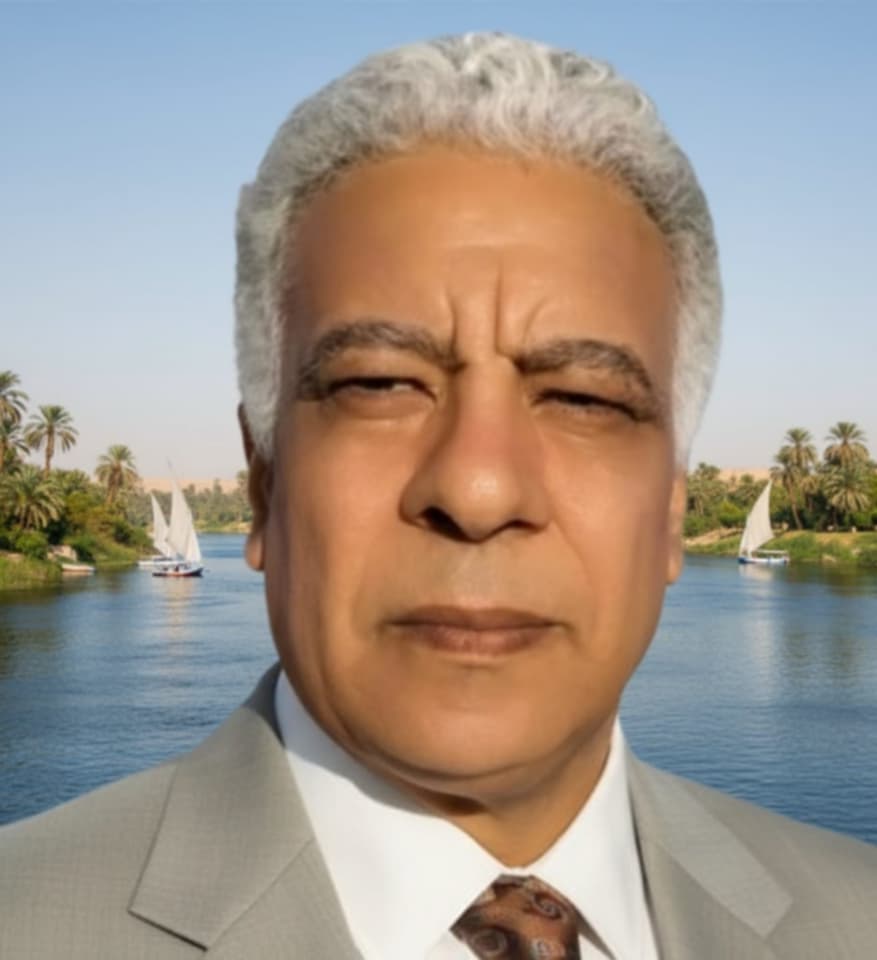
It was well past three in the morning, and the electron microscope cast pale, ghostly blue shadows across Dr. Assem’s hollow face. In front of him, resting safely in its glass casing, lay the small vial of “Serum X-7.” Five years of obsessive cancer research were about to go up in smoke, simply because the World Health Organization and rigid regulatory bodies demanded another seven years of clinical trials on animals. ”Seven years?” Assem whispered, a bitter sarcasm cutting through the silence. “In seven years, millions of people will die. The world needs a savior, and a savior does not wait for the permission of bureaucrats.” He packed his bag with cold, geometric precision and grabbed the vial.
He decided he would begin tomorrow—not in the sterile sanctuary of his laboratory, but in the darkest, most forgotten alleys of the city. In the “Salt Shacks” district—a limbo of mud and misery where no one asked for identification or medical licenses—Assem opened his free clinic. To the desperate locals, he was the “Doctor of Mercy,” a saint who treated them for nothing. To him, however, that clinic was the perfect anatomical theater for his clandestine experimentation. He examined his patients meticulously, weeding out the strong and choosing those whose bodies had already been devastated by the disease, those just a single step away from the grave. He had no need for written consent; the look of blind hope in their glassy eyes was enough to drive his cursed needle straight into their tumors. The first patient was Souad, a fifty-year-old woman whose lungs had been reduced to a pile of ash by terminal cancer. Assem injected her with a full dose of the serum.
He watched the liquid bubble inside the syringe and felt a cold shiver run down his spine—a murky ecstasy mixed with terror. He didn’t sleep a wink that night. He sat beside her bed in that damp room smelling of mold and sickness, monitoring her failing pulse. He whispered to himself like a man possessed: He who dies, dies; he who lives, lives… The only thing that matters is that the truth is born.
Souad didn’t make it. The following morning, her body was racked by violent convulsions and her lungs stopped completely; the serum had attacked the central nervous system instead of the tumor. Assem stood staring at the corpse with an unsettling coldness. He felt no guilt, no remorse. He picked up his black notebook and wrote in a steady hand: ”First dose: failure. Cause: carbonate levels too high. Must modify the formula and reduce the percentage by 15%. The victims are merely numbers in the equation of universal healing.” Burying Souad was no problem; in the slums, the dead are buried quickly, in silence, and without autopsies. Assem forged ahead with his scientific plan. He injected the second patient, then the third, then the fourth. His clinic became a silent crematorium. Three more patients died within two weeks—one bled from his eyes until he emptied out, while another’s heart stopped without warning. Assem observed death the way a chemist watches a reaction in a test tube, tweaking the formula with every body delivered to the earth. On the seventh attempt, the miracle he had been waiting for finally happened. Karim, a young man of just twenty, was being devoured by leukemia.
Three days after the injection with the modified formula, his cancer cells had regressed by 80%. Assem nearly went mad with joy. He embraced the boy, who had incredibly stood up and was walking. Assem shouted into the empty clinic: “I am a genius! I have created the cure!” Bypassing the law had been the right choice; health organizations were nothing but dead weight slowing down human progress. But the joy was a flash in the pan. On the fifth day, Karim returned, but he was no longer suffering from cancer. The serum had completely burned out his kidneys, and his skin, like wet paper, was beginning to peel off in shreds. Karim looked at Assem with eyes wide with terror: “What did you do to me, Doctor?” Assem understood the horrific truth: the drug killed the disease, but it destroyed the host. He stood there, hesitating: should he try to save him, or let him die to document just how far the serum’s effects would go? He chose the second option. He let Karim die slowly, just to take notes.
Sinister rumors began to echo through the neighborhood. “Whoever goes into that clinic never comes back.” Fear began to seep like poison into the hearts of the residents. At the same time, nightmares began to tear Assem’s nights apart. The faces of Souad, Karim, and the other phantoms appeared to him in the dark. But he shook his head, banishing the ghosts with titanic pride: History does not remember the victims; history only remembers the name of the doctor who defeated cancer. The police and health inspectors raided the clinic following a tip from an assistant who had grown suspicious of the skyrocketing death toll. They burst in and found Assem surrounded by vials of serum, his black notebook tightly gripped in his hands, and before him, the still-warm corpse of his latest victim. The investigator confronted him with disgust: “You are a criminal!
You killed innocent people to test your poisons on them!” Assem responded with a hysterical laugh that rang against the bare walls: “I killed seven, but I saved humanity! Look at my research, the drug is 90% ready! Without my rapid experiments, you would have waited years, and millions of people would have died!” In his solitary confinement cell, Dr. Assem sits motionless. His uniform, once the pristine white of a physician, has become the dull blue of a convict. He no longer has laboratories or microscopes, but he clutches a small piece of charcoal between his fingers, scratching his final chemical formula onto the stone wall. He has lost his freedom, his reputation, and his very humanity. Yet, he looks at the wall with a sick smile of triumph, absolutely certain that one day the world will dig through his notes and use his drug, completely forgetting the sea of blood he had to cross to engineer the cure.


